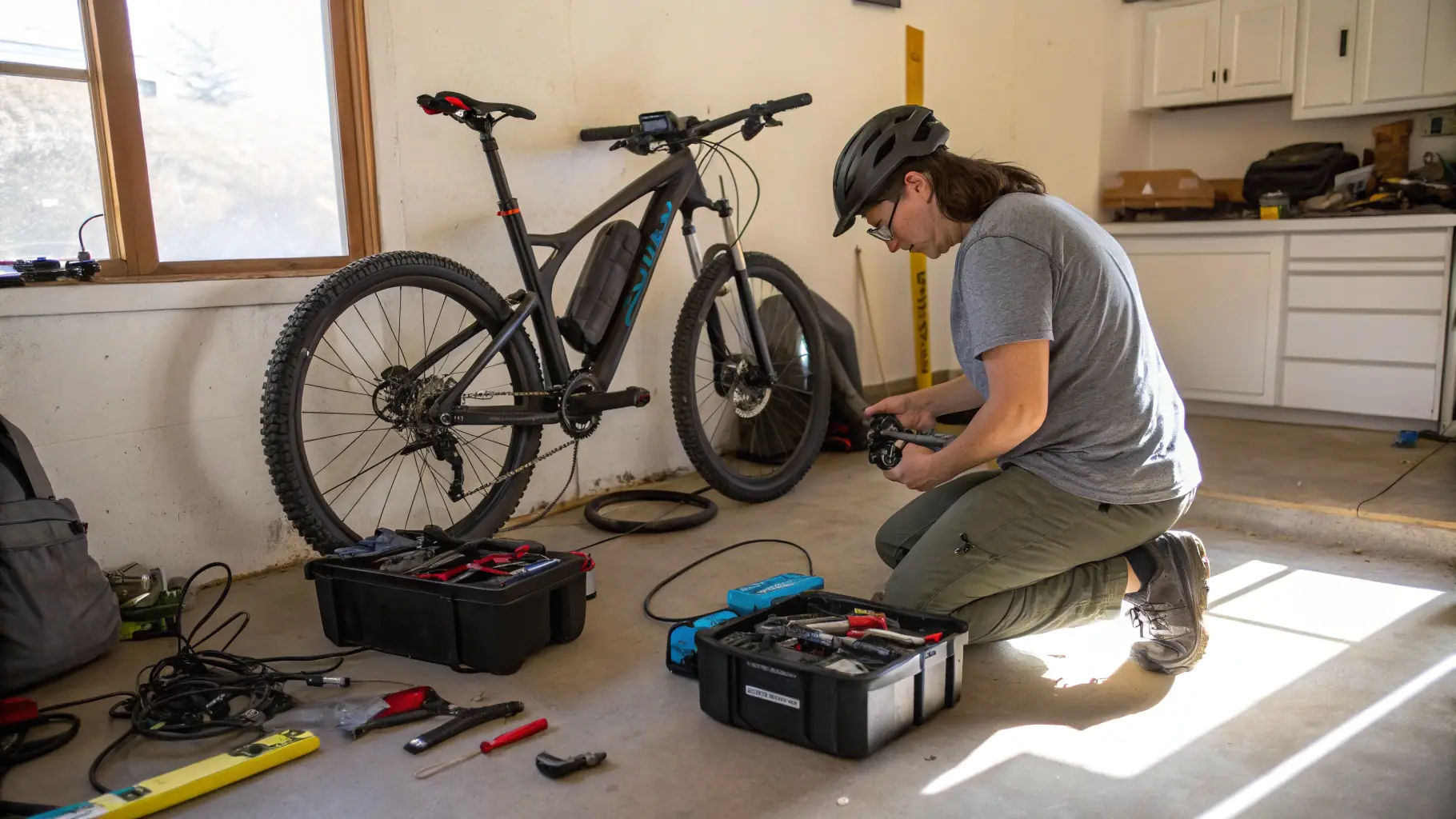


The Silent Beast: Inside the E-Bike Hacking Underground
At a red light, a polished sports car idles with a low growl. Beside it sits an ordinary e-bike—thin frame, quiet tires, completely unremarkable. The light flips green. The car lunges forward, and so does the bike. But there is no roar nor vibration. Just a silent blur slicing through the air, climbing past 50, then 80 km/h, leaving the traffic behind in confusion.
You just witnessed a broken piece of code.
The Shadow Market of Hardware

Modern e-bikes are heavily regulated ecosystems. Speed limits and power curves are baked into the firmware, usually capping assistance at 25 km/h depending on local laws. These machines aren’t restricted because they lack physical strength, but because they are programmed to obey.
To bypass this, riders turn to a shadow market of tuning hardware. Tiny modules, often ordered from niche forums under the guise of “private testing tools,” act as translators that lie to the system.
- SpeedBox: One of the most infamous chips on the market, it intercepts real-time data to trick the motor into reading 12 km/h while the bike pushes past 50 km/h. Newer iterations even allow riders to tune settings via Bluetooth.
- VOLspeed: Often considered the “smart choice,” this chip allows riders to define their own controlled ceiling rather than removing limits entirely. By setting the cap at 35 or 45 km/h, it evades built-in anti-tampering software.
- Levociraptor: Built specifically for high-end Specialized bikes, this module offers deep integration with advanced display systems, leaving a minimal digital footprint.
For those unwilling to open a motor casing and void a warranty, contactless solutions exist. The badassBox snaps onto the rear wheel’s speed sensor, altering the magnetic signal to artificially slow down the data feed. No wires are cut, and no seals are broken. The rider simply plugs it in and disappears.
Software, Jailbreaks, and Open-Source Extremes
Beyond physical chips lies pure digital manipulation. The underground speaks its own language, trading tips on achieving Ghost Speed (halving the displayed speed to fool the system) and bypassing Anti-Tuning Detection to avoid factory-imposed restrictions like Limp Mode.
Tools like the EBT Unlock Key can wipe Bosch firmware restrictions clean via a simple USB connection, leaving no physical trace. Mobile apps like STUNLOCKER allow riders to tap a screen and switch a Shimano motor’s regional setting to a more lenient US configuration. Others use software to digitally shrink the wheel circumference, forcing the motor to heavily overcompensate.
Then there are the purists. For them, derestricting a factory bike isn’t enough. They rip out the original brain entirely, installing open-source controllers like the VESC (Vedder Electronic Speed Controller). With absolute command over power delivery, these modified machines blur the line between bicycle and motorcycle, hitting speeds upwards of 90 km/h.
The Philosophy of Defiance vs. The Reality of Physics

This subculture isn’t driven purely by an adrenaline addiction. For many modders, unlocking an e-bike is an exercise in the right to repair—a rejection of “digital guardianship.” They argue that a company shouldn’t dictate how a product behaves after it has been purchased. Speed is just the byproduct of reclaiming ownership over a locked system.
Manufacturers fight back with over-the-air updates, patching vulnerabilities and reinforcing digital locks. Within days, the underground counters with fresh exploits. It is a relentless, quiet cold war of locking and cracking.
But ideology doesn’t change physics. Brakes engineered to stop a 25 km/h commuter bicycle cannot handle a machine traveling at triple that speed. Frames flex beyond their structural limits, motors overheat, and densely packed lithium batteries are pushed into volatile territory. At 80 km/h, a minor mechanical failure becomes catastrophic.
Furthermore, crossing that speed threshold strips the machine of its legal status. The moment the limit is bypassed, it ceases to be a bicycle. It becomes an unclassified, uninsured, and illegal motor vehicle. In the event of a crash, the liability is absolute.
The New Power
What was once the domain of specialized engineers now only requires curiosity and an internet connection. An ordinary commuter bike can be transformed into a silent beast with a single tapped screen or a hidden chip. The technology is highly accessible, and the temptation to break the rules is embedded right into the handlebars.
The barrier to entry is gone. The only thing keeping the machine in check is the rider’s choice to leave the code alone.